Full Spectrum Hemp in a Topical Serum: What the Skin Actually Does With It
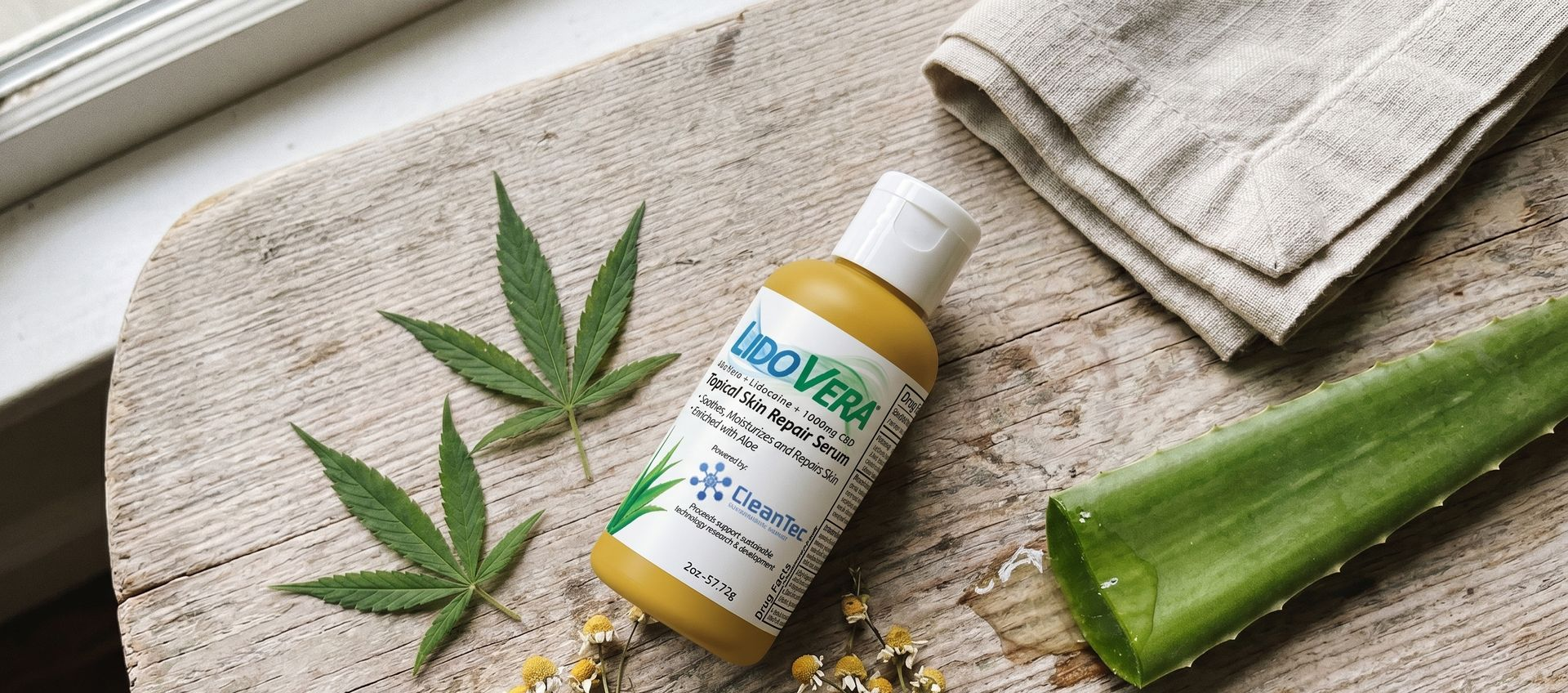
Quick Answer: The skin has its own endocannabinoid system - a network of receptors involved in regulating inflammation, pain signaling, barrier function, and cellular repair. Full spectrum hemp compound applied topically interacts with this system directly at the skin level without entering the bloodstream in meaningful amounts. It is not a CBD supplement. It is not recreational. It is one of three active ingredients in LidoVera, doing a specific job at the site of application.
Key Takeaways
- The skin contains a network of endocannabinoid receptors - CB1, CB2, and others - that regulate inflammation, barrier repair, and pain signaling locally. Topical hemp compounds interact with this system without requiring systemic absorption.
- Full spectrum hemp contains the complete range of cannabinoids, terpenes, and plant compounds from the hemp plant. CBD isolate contains only the isolated CBD molecule. The difference in biological activity is significant and well-documented.
- The entourage effect describes the way full spectrum compounds work together to produce a broader and more consistent effect than any single isolated compound. This is the reason LidoVera uses full spectrum rather than CBD isolate.
- Topical hemp compound does not produce intoxication. CB1 receptors responsible for psychoactive effects are located in the brain and central nervous system, not in meaningful concentrations in skin tissue.
- The research on topical hemp compounds covers inflammatory skin conditions including eczema and psoriasis, wound healing, and pain modulation at the skin level. LidoVera's use case range maps directly onto the conditions this research addresses.
- The hemp compound in LidoVera works through a different mechanism than the lidocaine and the aloe gel. The three ingredients are not redundant - they are addressing the same problem from three different biological angles.
- The noise in the CBD and hemp product category obscures legitimate topical applications. LidoVera is not a wellness brand. The hemp compound is in the formula because the receptor system it targets is real and its role in skin repair is documented.
The hemp and CBD product market has produced an enormous amount of noise over the past decade. Wellness claims, regulatory confusion, products that range from genuinely useful to marketing-forward nonsense. It is a difficult category to write about honestly because so much of the conversation has been shaped by brands with financial incentives to overclaim.
LidoVera uses a full spectrum hemp compound as one of three active ingredients in a topical repair serum. This post is a direct explanation of the mechanism behind that choice - the receptor system the compound targets, the difference between full spectrum and isolate, and what the research actually supports.
It is not a wellness post. It is a formulation explanation.
The Skin Has Its Own Endocannabinoid System
The endocannabinoid system is a biological signaling network present throughout the human body. It consists of endocannabinoid receptors, the endogenous compounds that activate them, and the enzymes that synthesize and break those compounds down. Its primary functions include regulating pain, inflammation, immune response, and cellular homeostasis.
Most people who have heard of the endocannabinoid system associate it with the brain and central nervous system - the pathway through which THC produces psychoactive effects. What is less commonly known is that the same receptor system is present in significant concentrations in human skin.
Skin tissue contains both CB1 and CB2 receptors, along with additional receptor types including TRPV1 and GPR55 that respond to cannabinoid compounds. These receptors are distributed throughout the epidermis, dermis, hair follicles, sebaceous glands, and sensory nerve fibers in skin. Their local function is regulation - inflammation levels, barrier repair signaling, pain response at the skin surface, and sebaceous activity.
This receptor system does not require systemic absorption to be activated by a topically applied compound. When a cannabinoid compound is applied to skin, it interacts with the receptors at the application site. It does not need to travel through the bloodstream to reach a target organ. The target is the skin itself.
This is a fundamental distinction from oral CBD products, which are absorbed systemically and reach the endocannabinoid system through circulation. A topical hemp compound is doing a different thing through a different route with a different set of receptors as the primary target.
Full Spectrum vs. CBD Isolate: The Difference in Practice
The hemp plant produces over a hundred identified cannabinoid compounds, along with terpenes, flavonoids, and other plant compounds. CBD is one cannabinoid among many. CBD isolate is the product of extracting and purifying that single molecule away from everything else the plant produces.
Full spectrum hemp extract retains the complete range of compounds the plant produces, within the legal THC threshold of 0.3% or below. This includes minor cannabinoids like CBG, CBN, CBC, and CBDV, the terpene profile of the specific plant, and the full flavonoid content.
The Entourage Effect
The entourage effect is the documented observation that full spectrum hemp compounds produce a broader and more consistent biological response than CBD isolate at equivalent CBD concentrations. The hypothesis - supported by a growing body of research - is that the minor cannabinoids, terpenes, and other plant compounds modulate and amplify the activity of CBD and each other in ways that isolated CBD does not replicate on its own.
For a topical application targeting multiple aspects of skin inflammation and repair, full spectrum is the more appropriate choice than isolate. The conditions LidoVera is applied to - sunburn, bug bites, eczema, psoriasis, muscle inflammation - involve multiple inflammatory pathways simultaneously. A compound with broader receptor activity addresses more of those pathways than a single isolated molecule.
THC Content and the Question of Psychoactivity
Full spectrum hemp at legal THC concentrations does not produce psychoactive effects when applied topically. The CB1 receptors responsible for THC's psychoactive activity are located in the brain and central nervous system. Skin tissue does not contain CB1 receptors in concentrations or configurations that produce intoxication from surface application.
Topical absorption of THC at the concentrations present in legal full spectrum hemp is not sufficient to produce detectable blood levels in standard testing. For topical use, the distinction between full spectrum hemp and CBD isolate is about biological activity at the skin receptor level, not about psychoactive risk.
The Skin Conditions the Research Covers
The research on topical cannabinoid compounds and skin is not speculative. It covers specific conditions with documented inflammatory and barrier dysfunction components.
Inflammatory Skin Conditions
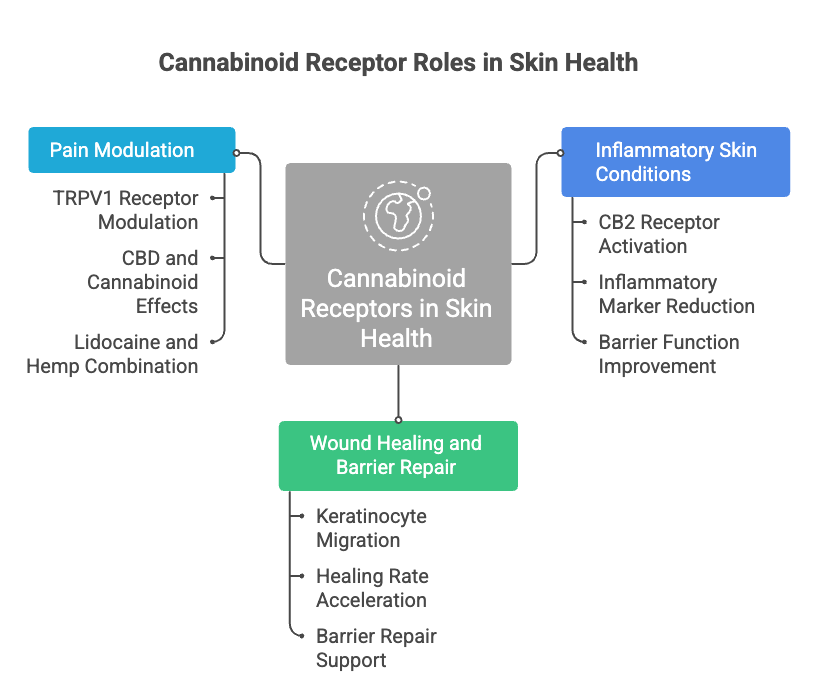
Eczema and psoriasis both involve dysregulation of the skin's inflammatory response and barrier function. The CB2 receptors in skin tissue are involved in modulating the immune and inflammatory signaling that drives both conditions. Studies on topical cannabinoid compounds in eczema and psoriasis have shown reduction in inflammatory markers, improvement in barrier function measurements, and symptom relief in subjects.
The mechanism is not suppression of inflammation in a blunt pharmacological sense. It is modulation - the endocannabinoid system in skin operates as a regulator, and activating its receptors supports the skin's own capacity to bring an overactive inflammatory response back toward normal.
Wound Healing and Barrier Repair
CB2 receptor activation in skin tissue is associated with accelerated keratinocyte migration - the process by which skin cells move to cover a wound or damaged area. Topical cannabinoid compounds applied to minor wounds and surface damage have shown effects on healing rate in research settings. The mechanism overlaps with the barrier repair function the aloe leaf gel in LidoVera also supports, which is one reason the combination produces results across a wider range of surface damage than either compound alone.
Pain Modulation at the Skin Level
TRPV1 receptors - sometimes called vanilloid receptors - are involved in the skin's pain and heat sensation response. They are activated by capsaicin, by heat above a certain threshold, and by certain inflammatory compounds. CBD and other cannabinoids modulate TRPV1 activity, which contributes to the pain-reducing effect of topical hemp at the skin level through a pathway that is distinct from lidocaine's sodium channel mechanism.
LidoVera's pain-relevant ingredients - lidocaine and the hemp compound - are therefore working on pain through two different receptor systems simultaneously. Lidocaine handles the sodium channel blockade. The hemp compound addresses TRPV1 and CB receptor activity. The result is broader pain coverage than either one provides alone.
The Noise Problem and How to Read Through It
The CBD and hemp product category has a credibility problem that is not entirely the fault of the compounds themselves. A wave of products entered the market with claims that ranged from slightly overstated to completely fabricated, regulatory enforcement was inconsistent, and the resulting consumer skepticism is reasonable.
Reading through that noise requires distinguishing between a few categories of hemp product that are often discussed as if they are the same thing:
- Oral CBD supplements - ingested products targeting systemic endocannabinoid activity. Research base is mixed and heavily dependent on dose, bioavailability, and condition being targeted.
- opical CBD isolate products - surface application of isolated CBD. Limited entourage effect. Research base is narrower than full spectrum topicals.
- Full spectrum hemp topicals - surface application of the complete plant compound profile. Most relevant research for skin-specific applications. This is what LidoVera uses.
- Hemp seed oil products - derived from hemp seeds, which do not contain significant cannabinoid concentrations. Nutritionally relevant as a carrier oil, not pharmacologically relevant as a cannabinoid source. Frequently mislabeled or confused with CBD products.
LidoVera falls clearly in the third category. The hemp compound in the formula is full spectrum, applied topically, and used for the specific receptor-level effects the research on topical hemp supports. It is not a wellness claim built on the general association between hemp and natural health. It is a formulation decision based on a documented biological mechanism.
The Role of the Hemp Compound Within the LidoVera Formula
Understanding the hemp compound's role requires understanding it in context of the full three-ingredient formula rather than in isolation.
- The aloe leaf gel carries active compounds through the outer skin layers. Without it, the lidocaine and hemp compound remain on the surface. The aloe delivers both.
- The lidocaine addresses the pain and surface sensitivity component - sodium channel blockade at the superficial nerve endings, with cold amplifying the effect.
- The hemp compound addresses the inflammatory and repair signaling component - CB2 and TRPV1 receptor activity at the skin level, supporting the skin's own regulation of the inflammatory response and accelerating the repair process. It is doing something the lidocaine is not doing and the aloe is not doing.
Three ingredients. Three different biological mechanisms. All three relevant to the same set of conditions. This is why the formula covers the range it covers - not because it was marketed to cover that range, but because the underlying mechanisms address the biology of surface tissue damage and inflammation comprehensively.
Frequently Asked Questions
Will the hemp compound in LidoVera show up on a drug test?
Topical hemp compounds at legal THC concentrations applied to intact skin are generally not absorbed in sufficient quantities to produce detectable blood or urine levels in standard drug screening. However, no topical product manufacturer can guarantee a negative drug test result for every individual under every testing protocol. If drug testing is a concern for your specific situation, consult with the testing administrator before use.
Is this a CBD product?
LidoVera contains a full spectrum hemp compound as one of three active ingredients. It is not marketed as a CBD product and is not positioned in the CBD wellness category. The hemp compound is in the formula for a specific topical application purpose - interaction with the endocannabinoid receptor system in skin tissue. It is more accurately described as a topical repair serum that uses full spectrum hemp compound as one of its active ingredients.
How does full spectrum hemp differ from hemp seed oil?
Significantly. Hemp seed oil is pressed from hemp seeds, which do not contain meaningful cannabinoid concentrations. It is a nutritionally useful oil with a good fatty acid profile but it does not interact with the endocannabinoid system in a pharmacologically relevant way. Full spectrum hemp extract is derived from the flowers and leaves of the hemp plant, where cannabinoid concentrations are highest. LidoVera uses full spectrum hemp compound, not hemp seed oil.
Can the hemp compound in LidoVera help with eczema?
The research on topical cannabinoid compounds in eczema shows effects on inflammatory markers and barrier function consistent with the mechanism described above. LidoVera is not marketed as an eczema treatment and we do not make specific medical claims about the product's effect on diagnosed conditions. What we can say is that the hemp compound in the formula targets receptor activity involved in the same inflammatory and barrier dysfunction pathways that characterize eczema, and that the product has been used for that purpose with consistent results.
Does the hemp compound interact with the lidocaine?
Not in a way that creates a safety concern or reduces the effectiveness of either compound. They work through different receptor systems - lidocaine through sodium channels, the hemp compound through CB2, TRPV1, and related receptors. The pain-relevant effects of both compounds are additive rather than competing. No interaction between topical lidocaine and topical hemp compounds at these concentrations has been identified as clinically concerning in the literature.
s the hemp compound legal in all states?
Full spectrum hemp extract at or below 0.3% THC is federally legal in the United States under the 2018 Farm Bill. State-level regulations vary and have changed over time. As of the date of this post, LidoVera ships to all states where full spectrum hemp products at legal THC concentrations are permitted. If you have a specific question about your state, contact us directly.
Sources
1. Biro T, et al. The endocannabinoid system of the skin in health and disease. Trends Pharmacol Sci. 2009;30(8):411-20. https://pubmed.ncbi.nlm.nih.gov/19608284/
2. Baswan SM, et al. Therapeutic potential of cannabidiol for skin health and disorders. Clin Cosmet Investig Dermatol. 2020;13:927-942. https://pubmed.ncbi.nlm.nih.gov/33335413/
3. Palmieri B, et al. A therapeutic effect of CBD-enriched ointment in inflammatory skin diseases and cutaneous scars. Clin Ter. 2019;170(2):e93-e99. https://pubmed.ncbi.nlm.nih.gov/30993303/
4. Russo EB. Taming THC: potential cannabis synergy and phytocannabinoid-terpenoid entourage effects. Br J Pharmacol. 2011;163(7):1344-64. https://pubmed.ncbi.nlm.nih.gov/21749363/
5. LidoVera Topical Repair Serum - cleantecsystems.com/BioBoost/LidoVera-Serum
Learn More About LidoVera