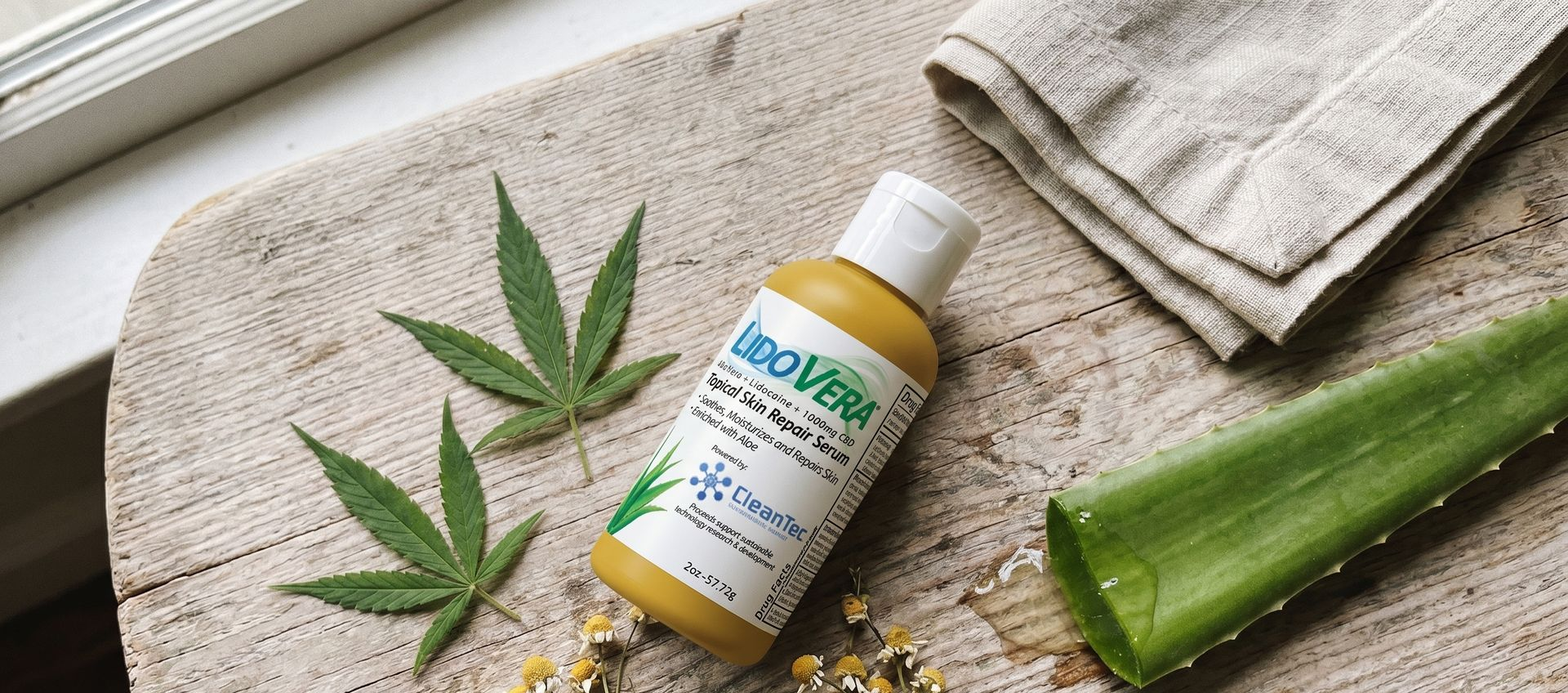
Topical Lidocaine: What It Is, How It Works, and Why It Belongs in a Repair Serum
Quick Answer: Lidocaine is a topical anesthetic that works by temporarily blocking sodium channels in nerve cell membranes, interrupting the pain signal before it reaches the brain. It is standard in hospitals, dental offices, and over-the-counter wound care. It is almost entirely absent from retail skincare, not because of safety concerns, but because the skincare industry is built around aesthetics rather than repair. LidoVera includes topical lidocaine because a serum designed for skin repair that does not address pain is an incomplete product.
Key Takeaways
- Lidocaine is a local anesthetic that blocks sodium channels in nerve cell membranes, preventing pain signals from being transmitted to the brain. It does not eliminate the underlying condition - it interrupts the experience of it while the repair process works.
- Topical lidocaine is FDA-recognized as a safe and effective over-the-counter active ingredient for surface skin pain relief at concentrations up to 4% for external use.
- The absence of lidocaine from most retail skincare is a positioning decision, not a scientific one. Skincare brands avoid clinical associations. LidoVera is not a skincare brand in that sense.
- Lidocaine has a secondary function in the LidoVera formula beyond pain relief - by reducing surface sensitivity, it allows the skin to better tolerate the application and improves absorption of the other active ingredients.
- Cold amplifies lidocaine's effect on inflamed tissue. The combination of physical cooling and chemical anesthesia produces a compounded result that either alone does not match.
- Lidocaine differs from benzocaine - the other common OTC topical anesthetic - in onset speed, duration, allergenicity, and mechanism. Lidocaine is the better choice for a multi-use repair serum.
- At the concentration used in LidoVera, topical lidocaine has a well-established safety profile for the applications the product is designed for.
Lidocaine has been in clinical use since the 1940s. It is one of the most studied local anesthetics in medicine. Dentists use it. Emergency rooms use it. Tatoo artists use it. It is on the World Health Organization's List of Essential Medicines.
Walk down the skincare aisle and you will find almost none of it.
That gap is not a scientific judgment. It is a market positioning decision. Understanding the difference between those two things is the starting point for understanding what LidoVera includes it and why that matters.
How Topical Lidocaine Actually Works
Lidocaine is a local anesthetic that operates at the cellular level by interfering with sodium ion channels in nerve cell membranes.
Pain signals travel along nerve fibers as electrical impulses. Those impulses are generated and propagated by the rapid movement of sodium ions through channels in the nerve cell membrane - sodium rushes in, the electrical charge shifts, the signal moves forward. This process is called depolarization.
Lidocaine binds to the sodium channels and blocks them. When sodium cannot move through the channel, depolarization cannot occur. The nerve cell cannot generate or transmit the electrical signal. The pain message does not reach the brain.
This is a reversible process. Lidocaine does not damage the nerve. It temporarily occupies the channel, the pain signal cannot pass, and as the lidocaine is metabolized and cleared from the application area, normal nerve function resumes. Duration depends on concentration, application method, and individual physiology, but topical lidocaine at standard OTC concentrations typically provides meaningful relief for 30 minutes to several hours.
Importantly, lidocaine does not fix what is causing the pain. A sunburn is still a sunburn. A bug sting is still producing its inflammatory response. What lidocaine does is interrupt the experience of that process long enough for the repair mechanisms in the formula - and in the body - to work without the person being in active discomfort the entire time.
The Difference Between Topical and Injectable Lidocaine
Most people encounter lidocaine as an injectable - the shot a dentist gives before a procedure, or the local anesthetic administered before a minor surgical intervention. That use involves lidocaine delivered directly into tissue at concentrations high enough to block deeper nerve structures completely.
Topical lidocaine works differently. Applied to the surface of skin, it penetrates to the superficial nerve endings in the epidermis and upper dermis. It does not reach the deeper nerve trunks that injectable lidocaine targets. The effect is surface-level pain and sensation reduction rather than complete regional anesthesia.
This is the appropriate mechanism for what LidoVera is designed to do. Sunburn pain, bug bite itch and sting, the surface discomfort of a minor burn or scrape - these originate in the superficial nerve endings that topical lidocaine reaches effectively. The formula does not need to replicate what an injection does. It needs to address pain at the skin level, and topical lidocaine is the right tool for that.
The Skincare Industry's Deliberate Avoidance of Lidocaine
The absence of lidocaine from retail skincare is worth examining directly because it is the most common question the LidoVera formula generates.
The skincare and beauty industry has historically positioned its products around aspiration - how skin looks, how it feels in a pleasurable sense, how it ages. The language is cosmetic: glow, radiance, hydration, firmness. Products are marketed as enhancing something desirable.
Lidocaine does not fit that language. Lidocaine signals that something hurts. Including it on a label positions a product in the repair and relief category rather than the beauty and wellness category. For brands whose marketing depends on the aspirational frame, that is an unwanted association.
This is a positioning choice, not a scientific or regulatory one. Topical lidocaine is an FDA-recognized OTC active ingredient with decades of safety data. There is no technical barrier to its use in a consumer topical product. Brands that exclude it are making a market positioning decision.
LidoVera is not a beauty product. It is a repair serum. The distinction is real and it is the reason lidocaine belongs in the formula. A product built around skin repair that does not address pain has made a concession to marketing that comes at the user's expense.
Lidocaine vs. Benzocaine: The OTC Anesthetic Comparison
Benzocaine is the other widely used OTC topical anesthetic - it appears in products like Orajel and various after-sun and anti-itch creams. Understanding the difference between the two is useful for evaluating why LidoVera uses lidocaine specifically.
Onset and Duration
Lidocaine has a faster onset than benzocaine - it begins working within 2 to 5 minutes of application. Benzocaine typically takes longer to reach peak effect. For a repair serum applied to a painful sunburn or a fresh bug sting, onset speed matters. Lidocaine's duration of effect is also generally longer than benzocaine at comparable concentrations.
Allergenicity
Benzocaine is an ester-type anesthetic and is associated with a relatively higher rate of contact allergic reactions, including a condition called methemoglobinemia at high doses. Lidocaine is an amide-type anesthetic with a significantly lower allergenicity profile. For a product intended for repeated use across a range of skin conditions, the safety margin of lidocaine is meaningfully better.
Mechanism Compatibility
In the context of the LidoVera formula, lidocaine's compatibility with the aloe leaf gel delivery system is relevant. The aloe gel's transdermal delivery function - covered in detail in our aloe post - moves active compounds through the outer skin layers. Lidocaine's pharmacokinetic profile is well-matched to this delivery mechanism. Benzocaine's ester structure is metabolized differently and interacts less predictably with carrier systems.
Lidocaine's Secondary Role in the LidoVera Formula
Beyond pain relief, lidocaine performs a secondary function in LidoVera that is worth understanding.
When skin is burned, stung, or inflamed, it is in a heightened state of sensitivity. The nerve endings at the surface are firing more readily than normal - this is part of the inflammatory response and is one reason sunburned skin hurts even when nothing is touching it.
That heightened sensitivity also makes the skin less receptive to topical applications. Inflamed skin reacts more readily to what is applied to it, which can reduce absorption and increase the likelihood of application site discomfort. Lidocaine's anesthetic effect reduces this surface reactivity, creating conditions where the aloe gel and hemp compound can penetrate more effectively rather than meeting a sensitized surface response.
The sequencing matters in practice. Apply LidoVera to a fresh sunburn, the lidocaine begins working on the surface sensitivity within minutes. As the surface calms, the aloe gel and hemp compound are moving through the delivery mechanism into the tissue below. The three ingredients are doing three different things in an ordered way, not simultaneously and independently.
Cold Temperature and Lidocaine's Effect
The instruction to refrigerate LidoVera is directly relevant to how lidocaine performs on inflamed skin.
Cold applied to inflamed or burned skin reduces local tissue temperature, which has two effects relevant to lidocaine. First, it reduces the baseline firing rate of the sensitized nerve endings before the lidocaine even begins its sodium channel blockade. Second, vasoconstriction caused by cold slows the local circulation that would otherwise clear the lidocaine from the application site more quickly.
The result is that cold-applied lidocaine both starts from a lower pain baseline and stays active at the application site longer than room-temperature lidocaine on the same tissue. The effect is not dramatic but it is consistent and it is the reason the refrigeration recommendation exists alongside the lidocaine inclusion rather than separately from it.
A cold bottle of LidoVera on a sunburn is applying physical cooling, lidocaine anesthesia, aloe leaf gel delivery, and hemp compound repair support in a single application. Each element is doing something the others are not.
Safety Profile and Who Should Not Use It
Topical lidocaine at concentrations up to 4% is FDA-recognized for OTC use on intact skin for temporary relief of pain and itching. The safety record across decades of clinical and consumer use is well established.
There are specific situations where lidocaine use requires additional consideration:
Do not apply to open wounds deeper than a surface scrape. Broken skin below the epidermal layer changes the absorption rate and the systemic exposure risk.
- Do not apply near or in the eyes.
- Do not ingest.
- Individuals with a known lidocaine or amide anesthetic sensitivity should not use LidoVera.
- Pregnant or nursing individuals should consult a physician before use.
- Do not apply to large surface areas simultaneously.
Topical lidocaine applied to very large areas of damaged skin can reach systemic levels that affect the cardiovascular system. Normal localized use - a sunburn on the shoulders, a bug bite on the arm - is well within safe parameters.
For the applications LidoVera is designed for - sunburn, bug bites, minor burns, sore muscles, surface skin repair - topical lidocaine at the concentration in the formula is appropriate and safe for most adults. If you have questions specific to your medical history, consult a doctor before use.
Frequently Asked Questions
Is the lidocaine in LidoVera the same as what a dentist uses?
The active ingredient is the same compound. The delivery method, concentration, and depth of effect are different. Dental lidocaine is injected directly into tissue at concentrations designed to block deep nerve structures completely. LidoVera's topical lidocaine works at the skin surface, reaching superficial nerve endings in the epidermis and upper dermis. The mechanism is identical - sodium channel blockade - but the application is surface-level rather than regional anesthesia.
Can you build a tolerance to topical lidocaine?
Tolerance to topical lidocaine with normal use patterns is not a documented clinical concern. Lidocaine is metabolized locally and systemically without the receptor-level changes associated with tolerance development in compounds like opioids. Regular use at normal application frequencies for the intended purposes does not reduce its effectiveness over time.
Why doesn't regular after-sun lotion include lidocaine?
Positioning. After-sun products are marketed as soothing and cooling - pleasant experiences associated with summer and outdoor activity. Lidocaine positions a product in the clinical pain relief category, which does not fit the aspirational marketing frame most after-sun brands use. The absence is a brand decision, not a formulation limitation.
How long does the lidocaine effect last when using LidoVera?
Duration varies based on application thickness, skin condition, individual physiology, and whether the product is applied cold. In general, topical lidocaine at OTC concentrations provides meaningful surface relief for 30 minutes to a few hours per application. LidoVera is designed for reapplication two to four times daily during active recovery from whatever condition you are treating.
Does lidocaine interact with the hemp compound in LidoVera?
Not in a way that creates a safety concern. The two compounds address different receptor systems - lidocaine works on sodium channels in nerve cell membranes, the hemp compound works on cannabinoid receptors involved in inflammation and repair signaling. They do not compete for the same pathways. The interaction is additive in effect - both contribute to reducing discomfort and supporting recovery without interfering with each other's mechanism.
Can children use LidoVera?
Topical lidocaine products are used in pediatric settings for surface pain management, but the appropriate concentration and application guidance differs from adult use. Consult a pediatrician before applying LidoVera to children, particularly for large surface area applications like a significant sunburn.
Read also: Aloe Vera Gel vs. Aloe Vera Extract: The Difference Actually Matters
Sources
Heavner JE. Local anesthetics. Current Opinion in Anaesthesiology. PubMed. (https://pubmed.ncbi.nlm.nih.gov/17620842/)
Becker DE, Reed KL. Local anesthetics: review of pharmacological considerations. Anesthesia Progress. PubMed.(https://pubmed.ncbi.nlm.nih.gov/22822998/)
FDA OTC Monograph - Topical Anesthetic Active Ingredients. Federal Register. (https://www.accessdata.fda.gov/drugsatfda_docs/omuf/monographs/OTC%20Monograph_M017-External%20Analgesic%20Drug%20Products%20for%20OTC%20Human%20Use%2005.02.2023.pdf)
Rosenberg PH, et al. Maximum recommended doses of local anesthetics. Regional Anesthesia and Pain Medicine. PubMed. (https://pubmed.ncbi.nlm.nih.gov/15635516/)
Learn More About LidoVera